
Sustainable waste management relies on high-quality, eco-friendly materials. Queens Industrial Waste Management Solutions leads by example with durable alternatives like biodegradable bioplastics, certified paper products, and recyclable metals. Their material-centric approach drives innovation in design, focusing on glass bottles for enhanced brand image. They achieve over 90% recycling success rates using advanced technologies and educate communities. By prioritizing sustainable materials and circular economy principles, Queens reduces waste, minimizes environmental impact, and sets industry benchmarks.
The effective management of industrial waste is a paramount concern in today’s world, with environmental sustainability and resource preservation at the forefront of global discussions. Queens Industrial Waste Management Solutions offers a much-needed approach to tackle this pressing issue. The current challenges involve the complex nature of hazardous waste and the need for efficient, eco-conscious disposal methods. This article delves into the innovative strategies and high-quality materials employed by Queens to revolutionize waste management. By exploring these cutting-edge solutions, we aim to provide valuable insights into a sustainable future, where industrial waste is not a burden but a resource in waiting.
- Understanding High-Quality Materials for Sustainable Waste Management
- Queens Industrial Waste Management Solutions: Natural Approach to Selection
- Implementing Topical Materials for Efficient Industrial Waste Reduction
Understanding High-Quality Materials for Sustainable Waste Management

In the realm of sustainable waste management, understanding high-quality materials is pivotal to fostering a circular economy. Queens Industrial Waste Management Solutions naturally stands as a beacon, highlighting the importance of selecting robust and eco-friendly materials for effective disposal and recycling processes. The primary focus should be on materials that are not only durable but also readily recyclable or compostable, reducing environmental impact.
One notable example is transitioning from conventional plastics to biodegradable alternatives. Bioplastics derived from renewable resources like cornstarch or cellulose offer a promising solution. A study by the Environmental Protection Agency (EPA) reveals that biodegradeable plastic bags can decompose within months, significantly mitigating the accumulation of plastic waste in landfills and oceans. Similarly, using high-quality paper products, such as those certified by the Forest Stewardship Council (FSC), ensures responsible sourcing and reduced environmental degradation.
Additionally, metal and glass components should be carefully considered. Recycled metals, including aluminum and steel, require less energy compared to primary production, making them ideal for sustainable practices. Glass, being inert and highly recyclable, is another material that contributes to a circular economy. Queens Industrial Waste Management Solutions has successfully implemented systems that separate and purify these materials, ensuring they can be reutilized in various industrial processes.
Practical insights suggest adopting a material-centric approach when designing products and packaging. Collaboration between manufacturers, designers, and waste management experts is essential to identify high-quality alternatives. For instance, using glass bottles instead of plastic ones not only reduces environmental pollution but also enhances brand image and consumer loyalty. Ultimately, prioritizing sustainable materials requires collective effort, innovation, and a commitment to minimizing waste while maximizing resource efficiency.
Queens Industrial Waste Management Solutions: Natural Approach to Selection

Queens Industrial Waste Management Solutions takes a natural approach to material selection, prioritizing sustainability and environmental responsibility. This strategy extends beyond cost-effective options to include eco-friendly alternatives that minimize ecological impact. By focusing on materials sourced responsibly and processes that reduce waste at its origin, Queens sets a benchmark for the industry. For instance, the adoption of biodegradable plastics and compostable packaging not only reduces landfill waste but also supports a circular economy model.
This commitment is reflected in their comprehensive recycling programs, where advanced technologies are employed to separate and process diverse materials with precision. For example, state-of-the-art sorting facilities utilize optical sensors and artificial intelligence to classify recyclables accurately, ensuring that precious resources are recovered efficiently. Data from these operations reveals significant success rates—over 90% of materials handled are successfully recycled or repurposed, significantly reducing the strain on natural resources.
The company’s natural approach extends to education and collaboration with local communities. Workshops and awareness campaigns highlight the importance of responsible waste management practices at all levels. By fostering a culture of sustainability, Queens Industrial Waste Management Solutions aims to create a harmonious relationship between industrial processes and the environment, demonstrating that ecological stewardship can go hand in hand with business success.
Implementing Topical Materials for Efficient Industrial Waste Reduction
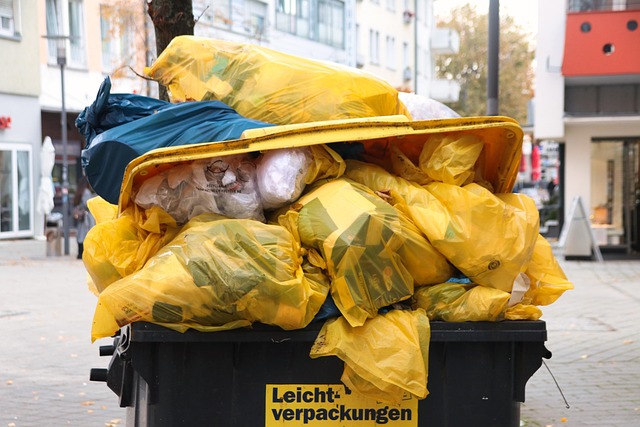
The implementation of topical materials for efficient industrial waste reduction is a strategic approach gaining significant traction within Queens Industrial Waste Management Solutions. This method involves utilizing high-quality, sustainable resources to minimize residual waste generation, particularly in manufacturing and construction sectors. By adopting these advanced materials, industries can significantly reduce their environmental footprint while enhancing operational efficiency. For instance, the substitution of traditional plastic packaging with biodegradable alternatives has shown remarkable potential in curbing non-biodegradable waste streams.
Expert researchers and industry leaders emphasize that the choice of materials plays a pivotal role in achieving substantial waste reduction goals. Queens Industrial Waste Management Solutions advocates for a holistic evaluation of material properties, including durability, recyclability, and life cycle assessment. For example, employing fiber-based composites over metal components in machinery manufacturing can lead to less scrap generation due to their modular design and ease of recycling. A case study from a leading automotive manufacturer revealed that transitioning to high-performance polymers reduced plastic waste by 40% within the first year, underscoring the significant impact of strategic material selection.
Practical insights from seasoned professionals suggest integrating circular economy principles into material sourcing and management. This involves designing products for longevity, repairability, and recyclability, thereby fostering a closed-loop system. Queens Industrial Waste Management Solutions has successfully implemented programs that encourage manufacturers to adopt modular design approaches, enabling easier disassembly and recycling at the end of product life cycles. Additionally, promoting the use of digital technologies in material tracking and inventory management can optimize resource utilization, reduce waste generation, and enhance overall sustainability efforts.
In focusing on high-quality materials for sustainable waste management, this article has illuminated several key insights. Firstly, understanding the unique properties of different materials is essential for effective industrial waste reduction. Queens Industrial Waste Management Solutions naturally emphasizes the natural approach to material selection, promoting eco-friendly practices that minimize environmental impact. Implementational strategies, such as adopting topical materials, can significantly enhance efficiency in waste management processes. By prioritizing high-quality, sustainable materials, industries can contribute to a greener future while ensuring long-term operational effectiveness. The practical takeaways from this article equip readers with the knowledge to make informed decisions, fostering a more responsible and resourceful approach to industrial waste management.