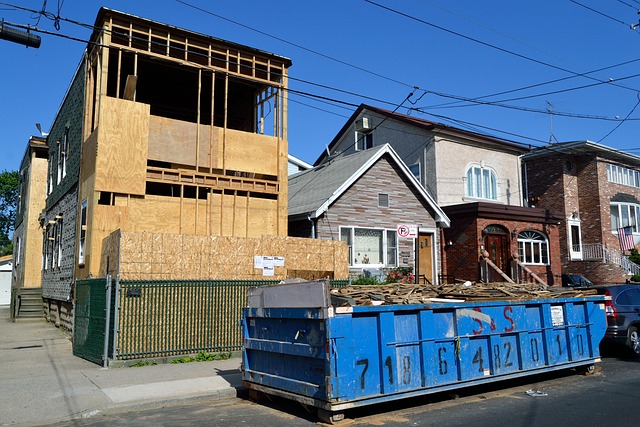
Queens Industrial Waste Management Solutions revolutionize urban sustainability in New York by minimizing environmental impact through advanced sorting (95% accuracy), source separation, and waste-to-energy conversion. These strategies reduce landfill contributions, promote recycling, and lower operational costs up to 30%. Collaboration among stakeholders fosters circular economy models, enhancing public safety and resource recovery across diverse industrial sectors. Continuous education is key to expanding these successful solutions.
In today’s world, effective professional waste management is not just an environmental necessity but a cornerstone of sustainable urban development. The challenge lies in the complex web of industrial, commercial, and residential waste streams, particularly within densely populated areas like Queens. Traditional methods often fall short, leading to mounting environmental concerns and health hazards. However, Queens Industrial Waste Management Solutions offer a promising avenue to revolutionize waste handling. This article delves into the intricacies of these solutions, providing valuable insights into how experts are transforming the landscape of industrial waste management, ensuring a cleaner, healthier future for our communities.
- Understanding Queens Industrial Waste Management Solutions: The Basics
- Implementing Effective Strategies for Professional Waste Management
Understanding Queens Industrial Waste Management Solutions: The Basics

Queens Industrial Waste Management Solutions represent a critical component of sustainable urban development. The bustling metropolis of Queens, New York, generates significant industrial waste—a byproduct of its thriving economy. Effective management of this waste stream is essential not just for environmental preservation but also for public health and safety. Professionals in Queens Industrial Waste Management Solutions employ sophisticated strategies to minimize, reuse, and recycle materials, significantly reducing the ecological footprint of industrial activities.
A comprehensive approach involves sorting and categorizing waste at the source, ensuring proper collection and transportation by specialized providers. For instance, electronic waste (e-waste) requires unique handling due to its hazardous components, prompting dedicated programs for responsible recycling. Queens has seen success with pilot projects utilizing innovative technologies like advanced sorting machinery, which can classify materials with up to 95% accuracy. These solutions not only streamline the recycling process but also enhance the quality of recycled products.
Moreover, collaboration among local businesses, waste management companies, and government agencies is pivotal. Partnerships facilitate the implementation of circular economy models, where waste from one industry becomes a resource for another. For example, organic waste from food processing facilities can be transformed into compost, enriching soil in agricultural sectors. Such interconnected systems not only reduce landfill contributions but also foster a resilient and sustainable local economy. Expert advice suggests that continuous education and engagement with stakeholders are key to expanding these successful models, ultimately leading to a cleaner, healthier Queens.
Implementing Effective Strategies for Professional Waste Management
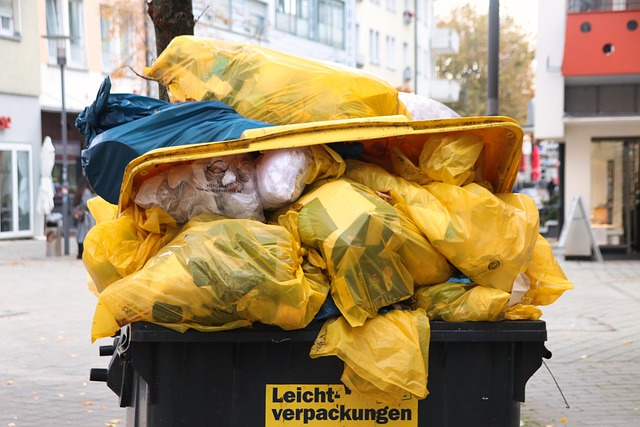
Professional waste management involves more than just collection and disposal. It’s a strategic process that requires implementing effective strategies to minimize environmental impact, optimize resource recovery, and maximize operational efficiency. Queens Industrial Waste Management Solutions has been at the forefront of this evolution, providing cutting-edge solutions tailored to diverse industrial sectors.
One key strategy is source separation, where waste is sorted at the point of generation. This involves educating employees on proper waste segregation, using dedicated bins for different material types, and implementing automated sorting technologies. For instance, a leading manufacturing facility in Queens adopted a comprehensive recycling program that separated plastic, paper, metal, and glass. Within six months, they achieved a 60% recycling rate—a significant leap from their previous 25%. This not only reduced their environmental footprint but also generated substantial cost savings through material recovery.
Another game-changer is the adoption of advanced waste-to-energy technologies. By converting non-recyclable or residual waste into usable energy, these systems provide a sustainable solution for long-term disposal needs. Queens Industrial Waste Management Solutions has partnered with several businesses to implement such systems, resulting in significant reductions in greenhouse gas emissions and dependence on traditional landfill sites. A case study of a major food processing plant showed a 75% decrease in waste sent to landfills after installing a state-of-the-art incineration facility, producing enough energy to power 200 average homes annually.
Furthermore, leveraging data analytics can optimize the entire waste management process. By tracking waste generation patterns, identifying peak demands, and analyzing material composition, companies can make informed decisions on collection routes, recycling efforts, and resource allocation. Queens Industrial Waste Management Solutions offers specialized software that provides real-time insights into waste streams, enabling clients to achieve up to 30% reduction in operational costs related to waste management. This data-driven approach ensures a more efficient, sustainable, and cost-effective professional waste management system.
By understanding the fundamentals of Queens Industrial Waste Management Solutions and implementing effective professional waste management strategies, businesses can significantly enhance their operational efficiency and environmental sustainability. Key insights include prioritizing recycling and composting to reduce waste sent to landfills, adopting innovative technologies for sorting and processing, and fostering a culture of responsible waste generation among employees. Additionally, collaborating with specialized waste management providers ensures access to expert knowledge and efficient logistics. Moving forward, organizations should prioritize these practices not only to meet regulatory requirements but also to contribute to a greener, more sustainable future.